

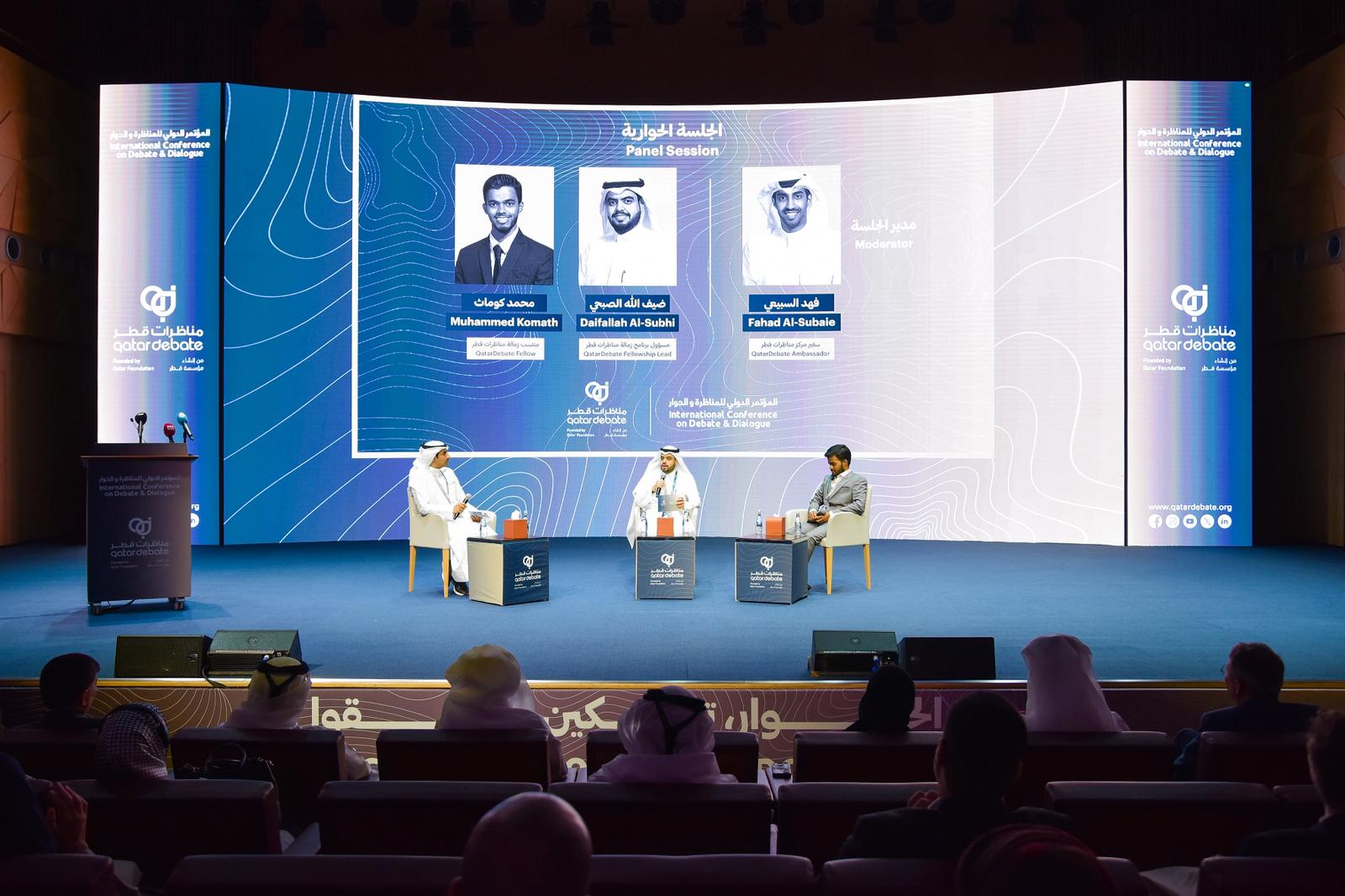
Doha, May 19, 2025 — QatarDebate, founded by Qatar Foundation, kicked off today the second edition of the International Conference on Debate and Dialogue at Qatar National Convention
Center. The global event brings together over 800 intellectuals, academics, and a dynamic group
of youth leaders, representing research, scientific, and cultural institutions from over 36
countries.
Debate, like diplomacy, serves as a
forum for the exchange of ideas where minds are sharpened and respect for differing views is
cultivated – H.E. Dr. Mohammed bin
Abdulaziz bin Saleh Al-Khulaifi
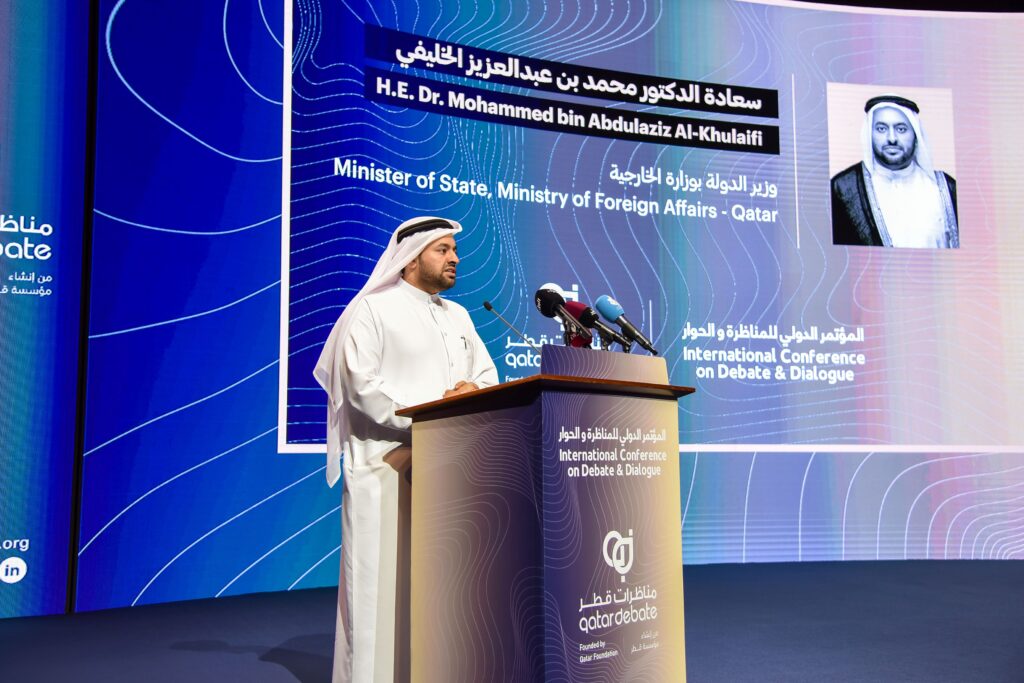
The opening ceremony was held in the presence of His Excellency Dr. Mohammed bin
Abdulaziz bin Saleh Al-Khulaifi, Minister of State at the Ministry of Foreign Affairs, and Dr.
Hayat Maarafi, Executive Director of QatarDebate Center, who delivered the opening address.
Building on a pioneering research initiative launched by QatarDebate in 2023, the conference
aligns with the organization’s broader strategy to advance interdisciplinary research in dialogue,
debate, and critical thinking. Through this platform, QatarDebate aims to empower youth to
shape modern discourse that is rooted in human values while engaging with the challenges of
contemporary thought.
In the opening ceremony, His Excellency Dr. Al-Khulaifi emphasized through his remarks that
the conference represents a valuable opportunity to explore the practical dimensions of dialogue
and debate, examining their tools and methods, which contributes to fostering a culture of
constructive discourse, mutual respect, and understanding within societies.
He highlighted the deep-rooted connection between debate and diplomacy, noting that debate is
not merely about presenting ideas, but also serves as an effective means of resolving intellectual
differences through wisdom and constructive dialogue.
“Hence, the profound relationship between debate and diplomacy is evident; both are grounded
in dialogue and require attentive listening, thoughtful responses, and the ability to present
opinions with well-reasoned arguments and sound logic. Debate, like diplomacy, serves as a
forum for the exchange of ideas where minds are sharpened and respect for differing views is
cultivated,” he said.
His Excellency noted that Qatari diplomacy has become an influential force and a credible voice
amid global transformations, taking the initiative to chart paths toward solutions and build bridges of dialogue at times when traditional channels have collapsed and positions have grown
more polarized.
“The State of Qatar has embraced dialogue as both a political practice and a strategic principle,
rooted in its constitution and reflecting a steadfast vision that peace can only be achieved through
justice and the preservation of human dignity.”
This approach has solidified Qatar’s standing as a trusted and credible mediator, capable of
playing pivotal roles in complex issues that demand wisdom, neutrality, and influence, he added.
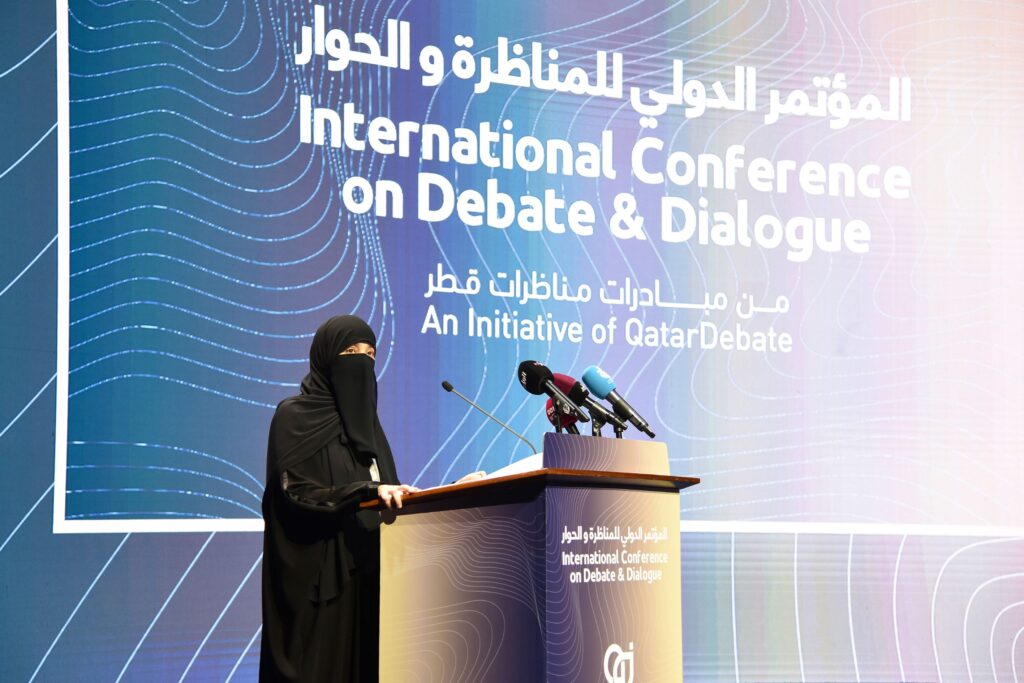
Dr Maarafi welcomed all participants to the forum, noting that the conference serves as a
scholarly and human-centered space that celebrates dialogue and forges new pathways for
understanding argumentation and developing its tools. “In this edition, we have worked to raise
the standards of academic evaluation. All submitted papers underwent rigorous peer review by
independent, specialized referees to enhance the conference’s academic value and strengthen its
credibility among international research events. This process enhances our position as a leading
forum in the fields of argumentation and dialogue that emanates from the heart of the Arab and
Islamic world to the global academic community,” she said.
Dr. Maarafi announced a strategic partnership with the prestigious Canadian journal Informal
Logic to publish a special issue featuring research presented at the conference, an initiative that
reflects the global academic community’s confidence in the event’s outcomes. She also launched
the second edition of QatarDebate Research Fellowship, which includes 12 new projects: six
theoretical studies on topics such as civil dialogue, legal argumentation, and comparative
analysis, and six applied projects in education and artificial intelligence. Among the applied
initiatives is the establishment of a specialized research unit to assess the impact of debate within
educational settings.
Her remarks were followed by a creative visual presentation by QatarDebate Center.
Professor Christopher Tandell, Director of the Centre for Research in Reasoning, Argumentation,
and Rhetoric and Professor at the University of Windsor, Canada, discussed ” Cross-Cultural
Argumentation as a Vehicle of Understanding.” His speech highlighted the importance of
understanding argumentation across cultures, noting that “the way others argue, and what they
consider evidence, broadens our understanding of argumentation. This diversity should be
reflected in how we engage with and evaluate discourse.”
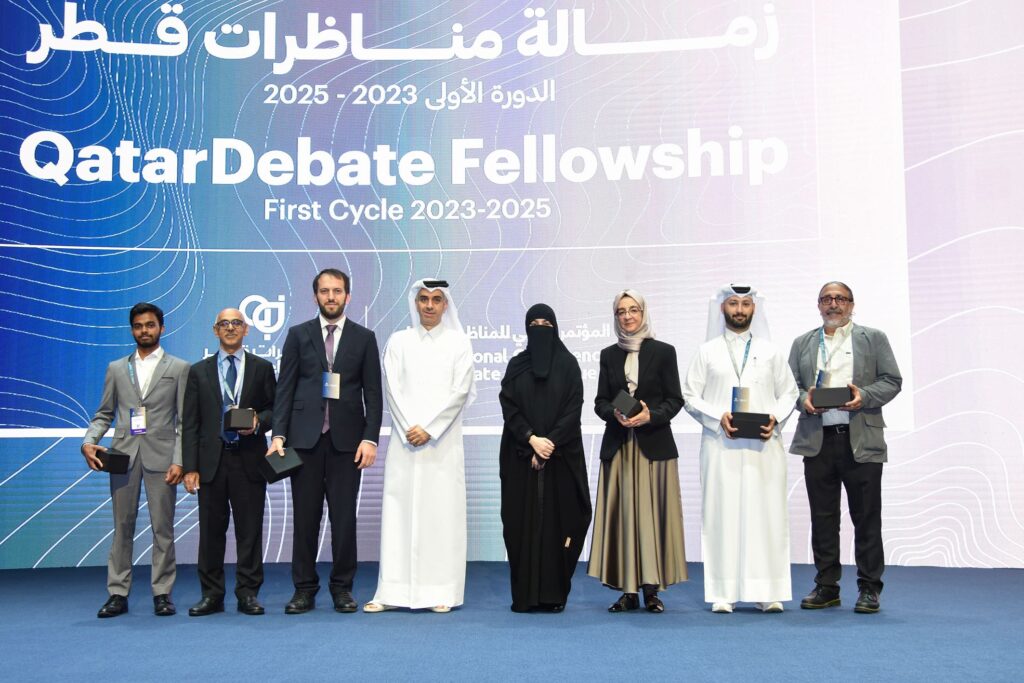
Following the screening of a short documentary produced by QatarDebate, Research Fellows
were honored. The first cohort of the fellowship has completed six pioneering research projects,
tackling advanced topics such as Arabic argumentation analysis, the development of AI models
for classifying Arabic arguments, the cataloging of heritage debate manuscripts, and comparative studies between Arab-Islamic and modern Western conceptions of argumentation.
The conference featured the signing of a memorandum of understanding between QatarDebate
Center and Fatih Sultan Mehmet University to promote collaboration in cultural and academic
fields. The collaboration will include events such as championships, forums, and workshops
focused on debate, dialogue, and language learning.
Fatih Sultan Mehmet University was represented by Rector Prof. Dr. Nevzat Şimşek and Mr.
Hamdi Arslan. Under the agreement, a permanent QatarDebate Center office will be established
at the university to support activities in coordination with relevant departments. An elective
course on the art of debate will be offered in Arabic, English, and Turkish, developed and taught
in partnership with QatarDebate Center.
The institutions will share expertise in training and arbitration to ensure the quality of joint
programs with research fellowships offered to students and researchers in Islamic studies and
Arabic language. The two institutions will also collaborate on editing and publishing manuscripts on debate in prestigious academic journals and co-organize regional and international debate championships, including the European Debating Championship.

Throughout the first day, participants engaged in a series of in-depth sessions addressing a wide
range of intellectual and research themes. These included the study of Islamic manuscripts in
collaboration with Fatih Sultan Mehmet University, best practices in debate training and
theoretical models of argumentation. Sessions also examined cultural variations in debate
formats and educational outcomes, discourse and argumentation in political conflicts, and
applications of argumentation in Islamic jurisprudence and thought.
Evening discussions delved deeper into topics such as informal logic, advancing adjudication,
empowering debate culture and education with AI, and the impact of debate on knowledge
development and academic skills. Other sessions explored political argumentation in the Arabic
context through case studies and examined the historical and legislative dimensions of Islamic
jurisprudence.
A key highlight of this year’s conference was an interactive exhibition featuring a rare collection
of historical manuscripts that document the art of debate in Islamic civilization. The exhibition is
presented in collaboration with the Jordanian Crown Prince Foundation, the Turkish Ministry of
Culture, and Fatih Sultan Mehmet University, with the support of Qatar Museums.
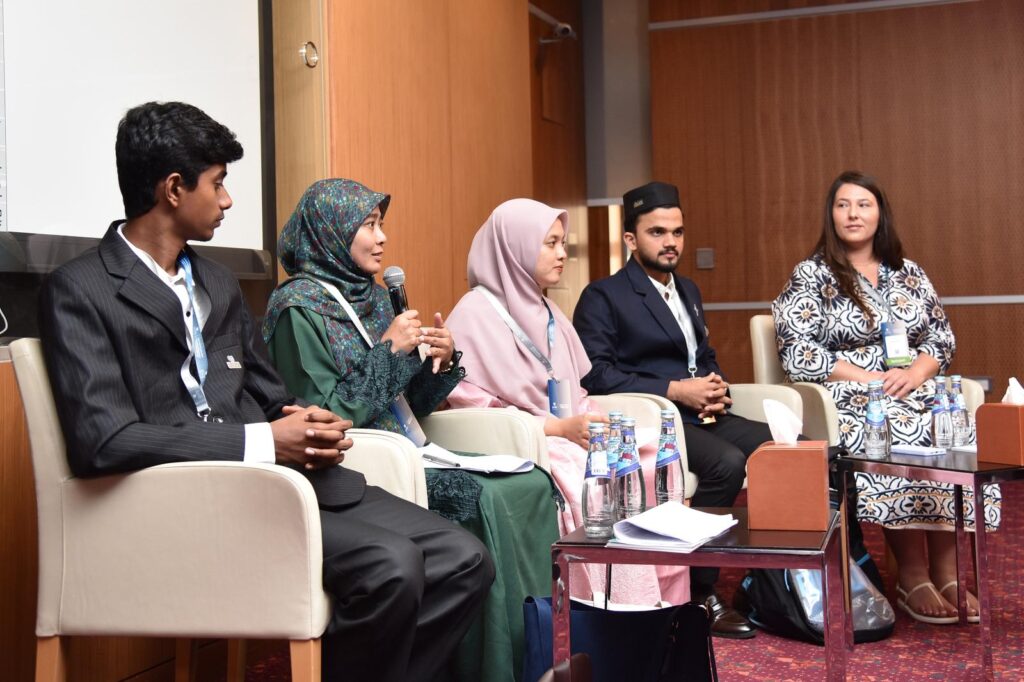
Youth engagement was central to the conference, with a select group of debaters, dialogue
leaders, and members of the Elite Academy contributing to a vibrant dialogue forum addressing
current global issues. The conference is further strengthened by its academic partnerships with institutions such as the University of Windsor in Canada, Fatih Sultan Mehmet University, Ibn
Khaldun University in Turkey, and the University of Ez-Zitouna in Tunisia.
This year’s event builds on the momentum of the 2023 inaugural edition, which attracted over
800 participants from Qatar and around the world, cementing QatarDebate’s role as a leading
global platform for intellectual exchange.
Leave a comment